
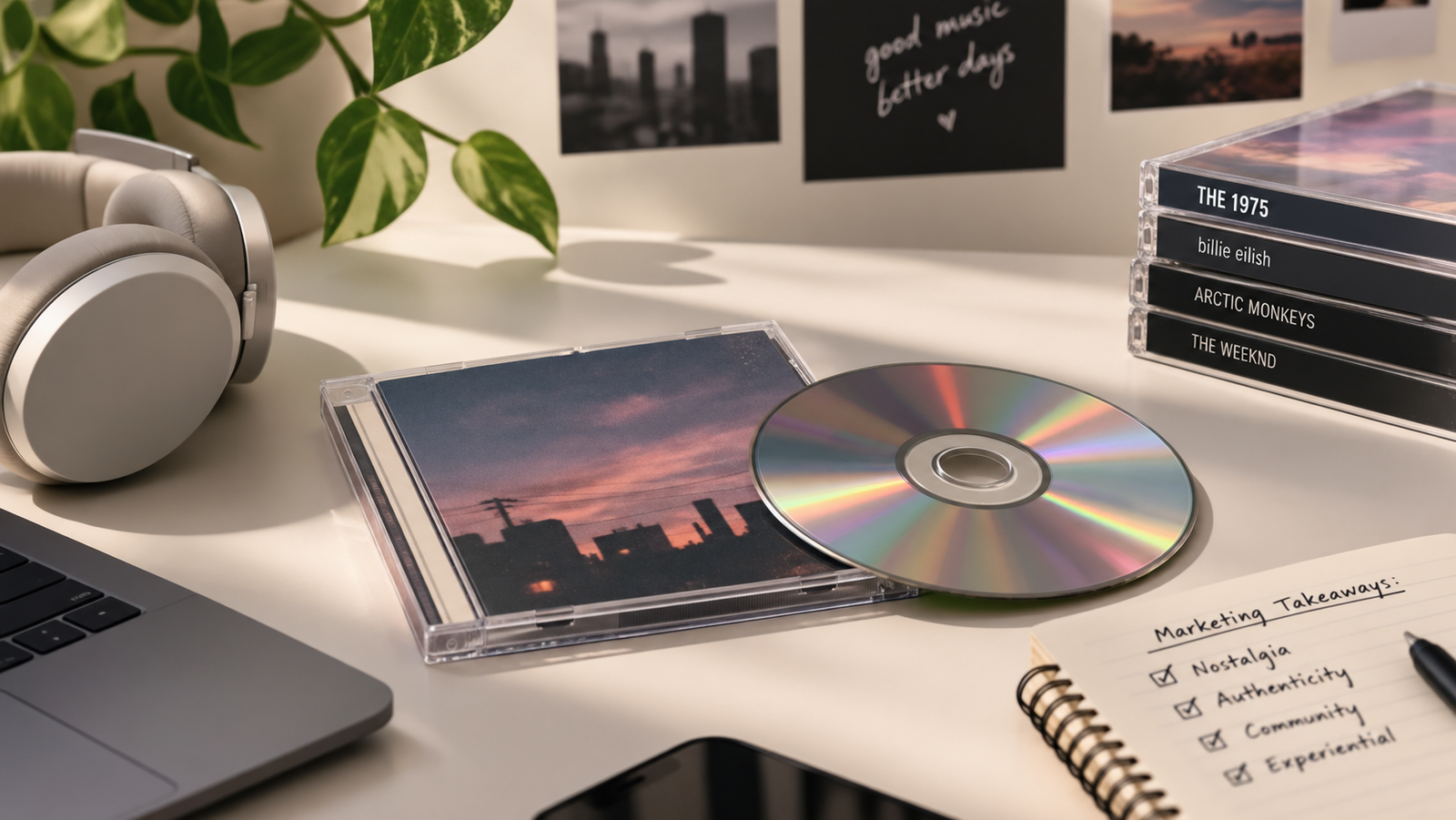
Walk into a teenager’s bedroom right now, and you might spot a stack of shiny plastic CD cases sitting right next to an iPhone. No, it’s not a vintage movie set. It’s a real, live shift in how digital natives want to experience culture. In a world of infinite streaming and relentless algorithms, Gen Z is actively choosing physical limits. They want the tactile ritual and the unskippable vibe of the compact disc.
For years, convenience was king. Now, we’re drowning in it. This physical media comeback shows that younger buyers are quietly opting out of the non-stop digital noise. They are looking for something deliberate, tangible, and sensory. They want media they can actually hold.
Why Shiny Plastic Discs Are Winning Over a Digital-Native Generation
To understand why CDs are back, you have to understand how exhausting the internet has become. Gen Z has never lived in a world without instant, endless digital access. They grew up on subscription models, getting their music, movies, and art straight from the cloud. But this constant feed comes with a cost: choice fatigue and digital burnout. Buying CDs offers a sensory escape from loud, crowded, hyper-speed online spaces.
When every song ever recorded is just a swipe away, music starts to feel cheap. It turns into background noise for doomscrolling. But buying a CD, sliding it into a tray, and sitting down to flip through the lyric booklet? That takes effort. It forces you to pause. This behavioral shift is driving the latest physical media sales trends, proving that younger listeners want real ownership, not digital rentals. When you stream, you own zip. You’re just renting temporary access. Buy a CD, though, and you get a real artifact that belongs to you immune to licensing disputes or sudden platform shutdowns.
There is also a funny paradox here: Gen Z is obsessed with collecting things from an era they missed. Born between 1997 and 2012, most of them weren’t even around during the late-90s and early-2000s peak of the CD. Yet they’re drawn to the format because it feels different and historic. It’s a physical anchor to a slower, more deliberate world, a sharp contrast to the hyper-speed digital ecosystem they navigate every single day.
The Psychology of Nostalgia Marketing to Gen Z
Selling retro vibes to teenagers and college kids might sound backward, but nostalgia marketing to Gen Z works incredibly well. This generation deals with ridiculous amounts of screen time, intense academic stress, and constant global chaos. They’re hungry for brands that offer quiet, comfort, and real stories. In fact, research shows that nostalgic campaigns can spark up to two times higher engagement than typical, future-focused ads.
Nostalgia is an emotional anchor. When a brand taps into vintage style, it feeds a deep craving for a simpler, friendlier visual world. Gen Z looks at the late 90s and early 2000s as a golden age, a time of colorful tech, real-world toys, and human connections before social media algorithms hijacked everything. This isn’t just about being stuck in the past. It’s about finding comfort in an aesthetic that feels simpler and more human.
But here’s the catch: nostalgia marketing only works if you build a bridge to the present. If a campaign is just a history lesson, it feels like a dusty museum exhibit, cold and irrelevant. To really connect, you have to repackage those retro elements for today. You aren’t trying to trick Gen Z into thinking they’re living in 2001. You’re taking the warmth and simplicity of 2001 and dropping it into their lives right now, helping them deal with the heavy realities of 2024 and beyond.
Visual Triggers of the Y2K Era: Packaging, Palettes, and Retro Filters
To get this crowd’s attention, you have to speak their visual language. According to the Morning Consult Gen Z Brand Perception Index, positive feelings toward nostalgic branding among young consumers have hit a massive 74%. This isn’t a niche trend; it’s a mainstream reality.
Want to tap into that 74% favorability? Focus on the three design triggers driving the most engagement right now:
- Y2K Aesthetics: Think metallic finishes, optimistic cyber-blues, translucent plastic, and bubbly, futuristic fonts. This is the look of early-web optimism, before everything online got corporate, flat, and boring.
- Early 2000s Cartoon and Pop Culture Revivals: Bold outlines, saturated neons, playful characters, and quirky doodles that look hand-drawn instead of digitally perfect.
- Analog Photography Filters: Heavy grain, light leaks, and soft-focus lenses. These details mimic the messy charm of disposable cameras and cheap early-2000s digicams the exact opposite of the sterile, hyper-sharp photos shot on today’s iPhones.
Designing a physical marketing strategy feels a lot like opening a fresh CD. Think about the steps: peeling off the crinkly plastic wrap, breaking the paper seal along the top, hearing that plastic hinge snap open, and sliding out a glossy booklet that still smells like fresh ink. You can build that same satisfaction into your product packaging. Focus on the weight of the paper, the tactile textures, and the satisfying “click” of a box opening. Suddenly, a boring unboxing becomes a full sensory ritual.
Translating the CD Craze into a Modern Tactile Marketing Strategy
How do modern brands, especially purely digital ones, capture the magic of this physical comeback? The answer is to introduce limited-edition, physical-first collectibles. Even if your main product lives in the cloud, giving people a physical anchor can completely shift how they see your brand.
Case studies show that brands using nostalgic packaging get an instant 16% sales bump. Why? Because physical packaging turns a basic transaction into an experience. Imagine a skincare brand putting a new lotion in a translucent pump bottle shaped like an old-school pager. Or an indie clothing label shipping hoodies wrapped in custom newsprint designed to look like a 2004 teen mag.
You can use these tangible touchpoints to sway Gen Z’s buying habits, turning cheap, throwaway purchases into actual keepsakes. Here are a few practical ideas:
- Collectible Inserts: Swap the boring packing slip for a thick, matte postcard with retro artwork. Gen Z loves saving these to tape on their bedroom walls.
- Interactive Packaging: Design boxes that make people use their hands. Add slide-out drawers, pull-tabs, or perforated tear-strips to mimic the fun of opening retro media.
- Limited-Run Merch with Digital Purchases: If you sell software, online courses, or digital assets, bundle them with a small physical token, like a custom enamel pin, a patch, or a vintage-style zine “user manual.”
Stop worrying only about how fast you can ship something. Start thinking about how memorable you can make the physical interaction. That’s how you build a tactile strategy that cuts through the noise of a crowded internet.
How Heritage Brands Succeed with Nostalgia Marketing to Gen Z
You don’t need to be a brand-new startup to pull this off. Legacy brands are actually in the best position to win with nostalgia because they have deep, authentic archives to raid. Take Coca-Cola. Instead of chasing every new tech trend, they frequently bring back vintage logos, classic glass bottles, and old-school color palettes. They know their history is their superpower.
Here’s the secret: you don’t need perfect historical accuracy. Gen Z doesn’t care if your design matches the exact specs of a 1998 catalog. They care about the mood. They’re chasing a feeling, warmth, playfulness, simplicity not a history lesson. It’s about packaging an idealized version of the past into a cozy, welcoming escape.
To do this yourself, focus on retro packaging and fonts that trigger instant recognition. Using heavy, rounded serifs (very 70s and 80s) or quirky, geometric sans-serifs (classic Y2K) tells buyers that your brand has personality. It’s a clean break from cold, corporate minimalism. Pair those fonts with warm colors like mustard yellow, burnt orange, avocado green, or dusty lavender, and you’ll build real loyalty. Suddenly, your company feels like an old friend instead of a faceless tech giant.
Frequently Asked Questions
What is driving current physical media sales trends among younger generations?
The shift comes down to digital fatigue and wanting real ownership in a world of temporary streaming subscriptions. Gen Z wants to actually hold their media, slow down, and escape the relentless distraction of algorithms.
How does nostalgia marketing to Gen Z differ from marketing targeted at Millennials?
Millennials remember the past firsthand, but Gen Z feels “anemoia” a deep longing for a time they never lived through. For them, nostalgia is an escape hatch from modern digital stress into a simpler, highly aesthetic, and comforting world.
What visual design triggers are most critical for successful nostalgia marketing to Gen Z?
The big ones are Y2K metallics and translucent plastics, early-2000s cartoon styles, and analog photography filters like heavy grain and light leaks. These stand out because they’re the exact opposite of the flat, clean minimalism of the 2010s.
How can e-commerce brands implement a tactile marketing strategy without a physical retail footprint?
Double down on the unboxing experience. Use heavy-weight custom packaging, interactive box designs, and cool printed inserts like zines or collectible art cards. These tangible details turn a digital click-to-buy into a memorable physical event.
In what ways does nostalgic packaging change Gen Z buying behavior?
It turns everyday products into emotional, collectible keepsakes, which is why it drives an actual 16% bump in sales. It also gets younger buyers to display the packaging in their bedrooms and share it on social media, turning basic purchases into lifestyle statements.
Key Takeaways: Curating a Timeless Mood for the Future
If you want to get Gen Z nostalgia right, stop worrying about historical timelines. Focus on curating a comforting, timeless mood that offers a moment of quiet. Don’t lecture your audience on the history of the late 90s; just capture the warmth, simplicity, and tactile joy of that era.
Pair your digital campaigns with a real, hands-on physical strategy. Turn basic unboxing moments into memorable experiences. In a world where everything is speeding up, the brands that dare to slow down, use heavy-weight paper, and make physical things worth keeping will win over this hyper-digital generation. Let the humble CD guide you: sometimes the best way forward is to give people something they can actually hold.