
A Practical Framework to Get Rank in AI Search (Google, ChatGPT & Beyond)

A Practical Framework to Get Cited in AI Search (Google, ChatGPT & Beyond)

How to Rank in AI Search Results When Google Reads Meaning, Not Keywords

When your content is not being cited in AI search, it’s not your keyword problem. It’s your layout. AI search systems are not human readers. They segment it, add meaning to those segments using embeddings, and only retrieve the relevant segments that are the best match for the intent of a query. The whole article is not being assessed. Individual passages are.

The strategy that works is to answer the intent of the question directly, to organize content into independent sections to be easily extracted, to establish clear relationships between ideas, and to make it easy for machines to understand and trust your writing. By not being able to extract the content cleanly, you are being unsuccessful, regardless of whether you rank number one or not.

Why Your Content Is Not Getting Cited (Even If It Ranks)

You’ve likely observed this by now. You rank on Google. Traffic is stagnant or decreasing. You never show up on AI Overviews or ChatGPT answers. That is no coincidence. It’s a disconnection between the traditional SEO process and the way AI search works.

Older SEO focused on pages. A page has been ranked to the first spot and users click on a list of results. AI search operates on a whole new paradigm. The system fetches portions of text, produces a synthesized response and displays 2 or 5 citations. AI Mode sessions are 93% zero-click, and AI Overviews are now present for 25-48% of all Google searches, depending on the search type. A page might rank #1 and not be seen in any of the AI-generated responses. There is a real, measurable and growing difference between ranking and retrieval.

The Framework: How to Actually Get Ranked in AI Search

Step 1 – Start With Intent Clusters, Not Keywords

The worst structural error is that you write for a keyword rather than a problem. AI systems match meanings and intent, not words. A page focused on one sentence will only appear for the specific meaning of the sentence it is targeting; it will not appear for the users that might have other questions.

Keyword targeting is no longer being replaced, but rather it’s being refaced by intent cluster mapping. Go with your main keyword, then split it down into all of the actual questions that someone using that query may have. Every question should be a part of your content and each part should be a complete answer, not a chapter in a longer story. AI citation data shows that comprehensive intent coverage always has the advantage over pages with a lot of keywords in them, as the algorithm looks for the depth of the problem space, not the repetition of phrases.

Step 2 – Write for Passage Extraction

This is the biggest leverage change that you can implement without starting from scratch in terms of content strategy. AI systems don’t extract pages. They find small snippets of text that present a contained answer. Each section should address one question fairly, stand alone, and be comprehensible without the reader having to read the rest of the section.

The disparity in practice is tremendous. There is no extractable claim in “AI search is evolving rapidly and businesses need to adapt. The following sentence can be extracted and cited from the document: “AI search ranks content by meaning, using embeddings to match intent not exact keywords. If you need three paragraphs of setup to get your key insight, you will skip it.If it takes three paragraphs of setup to get your key insight, you will skip it. Write the insight first and then expand. Each section should start with the most significant claim, rather than lead to the claim.

Step 3 – Build Entity Depth, Not Just Topic Coverage

The bulk of content is broad and thin — covering numerous concepts without establishing sufficient relational depth for AI systems to leverage this as a trustworthy source. Entity depth involves articulating and clarifying the concepts you are using, detailing their interconnections and giving sufficient context so that an AI system can comprehend how your content relates to a larger knowledge area.

In the context of an AI search ranking article, this implies talking about more than just ranking; it involves explaining what embeddings are, how they are used in retrieval pipelines, the distinction between rank eligibility and citation selection, and the differences between semantic similarity and keyword matching. A piece that connects these concepts explicitly will provide AI systems with a much larger amount of information to work with than one that repeats the “optimize for semantic SEO” without any explanation of what this means or why it works.

Step 4 – Structure for Machine Readability

You are targeted to two audiences: the humans who will read your papers and the machine that will determine if your content is relevant for citation. Using question-based headings that assist retrieval systems in determining the answer to each section. Short paragraphs help minimize the chances of losing your key claim. Content is easily extracted without performing full processing of context when answers are provided at the start of each section instead of the end.

AirOps research found that pages with ten words or fewer sentences per page receive 18.8% more AI citations than the pages with more words per sentence, while comparison pages containing 3 or more structured tables see a 25.7% higher number of citations. If the point to be conveyed is not immediately apparent in an introduction or is buried within a story, it’s a system disadvantage. Structural transparency is not making the text simple, it is making its value immediately available to any system attempting to retrieve it.

Step 5 -Increase Citation Probability

Step one is to get retrieved. The next step is getting selected. A second layer of filters – metrics that assess clarity, relevance, and trust – are applied in AI systems to determine which sources can be cited. Defining words, having a step-by-step plan, using specific claims with concrete examples, and using the same words throughout increase your likelihood. What diminishes it: generic language that matches dozens of other pieces on the same topic, vague language that takes too long to get to the answer, and advice without any underlying mechanism or evidence. AI systems incentivize information that can be utilized — the information that can be inserted directly into a synthesized response without further interpretation.

Mistakes That Will Cost You Visibility

The biggest assumption at the moment is that if you’re ranked, you’re protected. Having a content strategy that relies solely on maintaining rankings without monitoring citations is missing half the picture of visibility in 2026.

While it may be tempting to keep cranking out content, it will just exacerbate the problem. AI systems are not incentivized to sell more; they are incentivized to be more precise. The AI-generated content may be semantically coherent but information generic without a structural oversight, which is just what retrieval systems struggle to cite. But if it’s long-form, just because it is 1,500 words long doesn’t mean it’s automatically going to be better, because if it was, a 4,000-word article that bury the lead in the storytelling would be worse.

What to Do Next

Begin with a targeted analysis of your most expensive pages, those which have good rankings but that aren’t listed in AI-generated responses. Ask three questions when reading each page: 1) Does every section begin with a direct answer? 2) Can any paragraph be reproduced without the context of the surrounding paragraphs and still make sense? 3) Is the key message evident in the first two sentences of every paragraph? Any “NO” to any of these is a retrieval gap.

Rewrite for extraction: Direct answer to first sentence of each section. Shorten sections making sure that each H3 only covers one question and not several loosely. Include definition blocks for important concepts. Next, change the way you look at your metrics — along with your usual ranking and traffic metrics, monitor how often your content gets featured in AI Overviews and whether it generates AI Overviews. The world of AI Mode is 93% zero-click, and visibility and traffic are no longer synonymous.

FAQ

Do keywords still matter in AI search?
Yes, as indexing signals and not as selection signals. Google categorizes your content correctly by using keywords. They are not the ones that select the citation, that’s the job of semantic similarity, passage clarity, and entity depth.

Why does ranking well not guarantee AI citation?
Because the criteria are not the same. While a page may meet traditional ranking indicators, the structure of the page may not be appropriate for an extraction of passages. Answers with low text rank but buried in the document, or ones which lack specific language, are excluded when the document is retrieved.

Can smaller or newer sites get cited ahead of established domains?
Yes. Content which is tightly scoped and definition-first, consistently performs better than longer pages with more authority who lack retrieval clarity. Citation is justification for accuracy rather than glory when the gap between structure is large.

Final Takeaway

Old School Search Engine Optimization: Keyword optimization. New reality: optimize answers for retrieval.

Content that is clear, organized, and meaningful, that is, it responds to a specific question in a manner that can be extracted, trusted, and reused is cited. When it’s either ambiguous, hidden, or optimized for the keywords and not the search intent, it gets lost in the gap between ranking and relevance. That’s an ever-expanding area.

How to Build 9 AI Employees for Your Startup (Without Replacing Humans)

How to Build 9 AI Employees for Your Startup (Without Replacing Humans)

Introduction: The Real Startup Scaling Problem

Recruiting is costly, time-consuming and risky. It can cost a startup upwards of $50,000 to employ a full-time worker – salary, benefits, orientation. And by that time the job may have changed.

That’s why AI workers have gone from concept to reality. By 2027, use of agentic AI is projected to increase 327% within companies, based on Salesforce research of 200 global HR leaders. The research also forecasts that once agentic AI is fully adopted, businesses will experience a 30% average productivity increase and a 19% drop in labor costs – or more than $11,000 per employee, per year.

But the key point for founders is this: 80% of the HR leaders surveyed think that in five years, the majority of workforces will be comprised of humans and AI agents – not humans or AI agents.

That’s the model this guide is based on. Not AI in place of humans. AI employees to extend your team, do the heavy lifting, and let your people do the thinking, creatively, and communicating.

What Is an AI Employee? (And Why the Definition Matters)

An AI employee is not a chatbot. This is crucial because most founders experiment with tools that respond to actions, rather than a system that generates results.

A chatbot provides information when prompted. An AI agent performs a specific task when activated. The concept of an AI employee is a role-based system with a defined role, with goals and KPIs, the tools it needs to do its job, and the ability to carry out an entire workflow from end to end with minimal human intervention.

The best way to explain the difference: a chatbot informs a customer that their order is on hold. An AI customer support employee listens to the complaint, finds the order, refunds it according to policy, sends the refund confirmation email, and logs the complaint in the customer system. Same situation. Wholly different level of skill and independence.

This job description approach – deciding what the job is before you choose a tool – is what sets apart startups that build an AI workforce system from those who just collect a bunch of tools that don’t communicate well.

Why Startups Should Build AI Employees Now

The data show the pace of adoption. By 2025, 91% of companies were already using one or more AI tools. By the start of 2016, 62% of companies were at minimum experimenting with AI agents and 23% were scaling agentic systems across different parts of the business. According to McKinsey’s State of AI report, 92% of firms expect to boost their investments in AI over the next three years.

For startups, it is all about the competition. Corporations are scaling up from pilot to full deployment. Not until you have AI employees will you have the advantage, but then you’ll be competing against teams who will have had one to two years of productivity gains.

According to the EY Agentic AI Workplace Survey, 86% of employees who work with agentic AI reported a boost to their team’s productivity. And, importantly, 84% of employees expressed excitement to work with agentic AI – it is managers who are holding back, not workers. Startups that articulate and roll out sensibly are in a first-mover opportunity.

Why AI Employees Should Not Replace Humans

This is where things are often misrepresented, so let’s be clear: AI employees work best when they take on execution so humans can focus on judgment.

AI is great at routine, structured and high throughput. It never gets fatigued, distracted or demotivated on Monday. But it struggles with tasks that demand empathy, complex ethical judgements, or need to reason in unpredictable circumstances. It hallucinates under uncertainty. It optimises for its objective function, not its spirit.

The hybrid workforce model that works best designs this division of labor as a feature, not a trade-off. AI works on the execution layer – the emails, the qualification, the scheduling, the analysis, the first drafts. Humans handle the direction layer – the planning, the relationship, the decision making, the art. The whole is greater than the sum of the parts.

Gartner forecasts that by 2026 20% of organizations will use AI to create a “flat” structure. But the Salesforce study is also clear: 89% of CHROs think AI agents will help them shift people into new roles that are more important to the business. The best way for startups to think about it is augmentation: each AI employee you create is one more human who can be redeployed to more valuable tasks.

How to Build AI Employees: A Step-by-Step Framework

The primary way to mess up building AI employees is to start with the tool. A founder finds an interesting looking tool, signs up and then wonders what to do. This is backwards. The role definition always comes first.

First, you need to decide what role to fill. Name it – AI Sales Development Representative, AI Customer Support Employee, AI Content Writer. Next, specify how that job will be measured: what will it do, what KPIs will it meet, what resources will it work with, and when will it pass the baton to a human?

With the role defined, you create the workflow. All of your AI employees follow a trigger-action-outcome model. Someone fills out a lead form – the AI decides if they’re a fit for your business – if they’re a fit, they get a personalised email from you – if they’re not, they get a nurture email. You need to know when to trigger it, what rules to apply, what the actions are and when to hand off to a human.

The second element is integration. If an AI employee cannot tap into your CRM, email and scheduling tools, it is not an employee, it’s a demonstration. Integration is the key to its power. Then you provide memory and context, so the AI knows what it knows and what it doesn’t, and you provide human checks and balances for anything that has business risk, such as a large refund, a response to a contract or a escalation to a high value client.

The 9 AI Employees Every Startup Should Build

These nine employees cover the key functions needed for the first 24-36 months of a startup’s existence. You do not build all nine at once. You build the role which affects revenue or alleviates your biggest pain point first.

The AI Sales Development Representative matches leads to your company’s ideal customer profile, issues a first-touch email, and schedules meetings into the calendar of a human account executive. The AI Customer Support Employee answers basic questions, handles routine requests (such as whether you’re eligible for a refund), and passes along hard-to-answer questions or emotional problems to a human, with all the necessary context at hand.

The AI Marketing Employee tracks marketing campaigns, generates insights, and schedules content. The AI Content Writer generates first drafts of blog articles, social media updates, and email campaigns from a brief, allowing the human editor to get up and running in half the time. The AI Operations Manager tracks the performance of content workflows, identifies exceptions and produces the weekly performance reports that would otherwise require hours of human analysis.

The AI Recruiter reviews job applications against specified criteria, book appointments for first interviews with selected applicants, and writes up a brief for the human hiring manager. The AI Data Analyst extracts data from connected reporting systems to generate daily performance reports and highlight exceptions. The AI CSM tracks usage activity, kicks off check-in campaigns for accounts with churn risk flags, and sends task notifications for customer onboarding. The AI Admin Assistant schedules meetings, handles meeting logistics and coordinates internal communication, freeing up your senior team’s time.

Cost vs ROI: The Real Numbers

Hiring a full-time employee for a startup ranges from $50,000-$120,000 per year on average. The majority of AI employee tool kits (automation platform, AI agent platform and needed integrations) cost between $200 and $2,000 per month.

The unit cost math is not the only factor, however. The more relevant consideration is productivity. A customer support AI employee that can handle 70% of standard tickets at a fraction of the cost of a full-time support staff member not only reduces costs but also frees up your human support staff to handle the interactions that require higher level skills. That’s a quality improvement that is difficult to value.

The catch is the time and effort to establish and maintain it. It can take anywhere from several hours (simple use case) to a month or more (complex solution with heavy integrations) to develop an AI employee. This should be taken into account when calculating ROI.

FAQ

What is an AI employee and how is it different from a chatbot?
A chatbot reacts to inputs and provides answers. An AI employee is a role-based system with defined goals, connected tools, and multi-step workflows that allow it to complete entire job functions rather than just respond to individual queries.

Can AI employees actually replace human staff in a startup?
The data from EY, PwC, and Salesforce consistently shows that the most effective model is augmentation rather than replacement. AI employees handle execution so human team members can focus on judgment, relationships, and strategy.

How long does it take to build a functional AI employee?
Simple workflows can be operational within hours using no-code platforms. Complex, deeply integrated AI employees with multiple tool connections and exception-handling logic typically take one to four weeks to build and test properly.

What tools do you need to build AI employees for startups?
The typical stack includes an AI agent framework or no-code automation platform, integrations with your CRM, email, and scheduling tools, and a language model for text generation and decision logic. The specific tools depend on which role you are building.

Conclusion: Start With One

The 2026 numbers are clear. The growth in agentic AI adoption, the resulting productivity improvements, and the growing chasm between startups that build AI employees well and those that don’t continue to grow at a compounded rate.

But the biggest error is starting with nine. Think of the role that resolves your most costly process – likely customer service or sales qualification. Do it right: clearly define the role, map the process, integrate the technology, insert the audits. Evaluate for 30 days. Then build the next one.

The future of startup teams is not humans versus AI. It’s humans making the decisions, and AI employees doing the work.

How Intelligent Search Works & Why It’s the Future

How Intelligent Search Works & Why It's the Future

What Makes Search “Intelligent”?

The Technical Architecture Behind Intelligent Search

Embeddings and Vector Search Foundation

BM25 and Lexical Precision

Hybrid Search Integration

Reranking and Final Optimization

RAG: Where Intelligent Search Meets AI Generation

Security and Enterprise Considerations

Measuring Search Intelligence

Multilingual and Multimodal Capabilities

The consistent performance across languages with support is assisted by a regular review based on multilingual benchmarks.

Performance Optimization and Scalability

Implementation Strategy and Best Practices

Gradual rollouts with user feedback collection help identify adoption barriers and optimization opportunities.

The Future Landscape of AI Search

Conclusion

what are the Negative Impacts of AI Overviews on SEO

what are the negative impacts of ai overviews on seo

The Hidden Truth: How AI Overviews Are Destroying Your SEO Traffic (And What to Do About It)

Have you noticed how,  I’ll show you why the negative impacts of AI Overviews on SEO are undermining your clicks, how it’s damaging your organic reach, and

What Are AI Overviews?

The Scale of the Problem: Why Every SEO Should Be Worried

Negative impacts of AI Overviews on SEO

Core Negative Impacts of AI Overviews on SEO

1. Sharp Click‑Through Rate (CTR) Decline


2. Surge in Zero‑Click Searches & Traffic Loss

No click.

3. Non‑Branded Queries Hit Hardest

4. Being #1 on SERP No Longer Equals Traffic

5. Risk of Misinformation, Hallucinations & Trust Erosion

what are the negative impacts of ai overviews on seo

The Hidden Costs: What Industry Reports Don’t Tell You

Brand Authority Dilution

Content ROI Deterioration

Competitive Intelligence Loss

How to Combat the Negative Impacts of AI Overviews on SEO

Optimize for AEO (Answer Engine Optimization) & GEO

Boost E‑E‑A‑T (Expertise, Experience, Authority, Trust)

Focus on Long-Tail & Niche Queries

  • You could use a variety similar to the answer engine optimization guide, SEO when AI Overviews appear, or strategies to remain visible despite AI Overviews.

Leverage Branded Queries

Sharpen Technical SEO & UX

Monitor When AI Overviews Show

Advanced Strategies for 2025 and Beyond

Content Clustering for AI Extraction

Interactive Content Development

Community and User-Generated Content

Frequently Asked Questions

“Will AI Overviews always kill my CTR?”

Not necessarily.

“Can I still rank if AI Overviews appear for my keyword?”

“How do I implement AEO without breaking SEO?”


“How long before AEO optimization shows results?”


Conclusion 


Supply Chain Risk Management Plan: Best Practices for Implementations

Supply Chain Risk Management Plan

Supply Chain Risk Management Plan: Best Practices for Implementations

Introduction

When you hear the words “Supply Chain Risk Management Plan,” you might picture something complex, a maze of logistics, disruptions, and contracts. But here’s the thing: understanding how to manage risks in your supply chain doesn’t have to be overwhelming. It’s really about having the right tools, strategies, and mindset to spot potential problems before they derail your business.

The actual definition of Supply Chain Risk Management Plan combined with its essential nature and strategic implementation strategies to maintain business continuity during unpredicted events will be our focus within this introduction.

What is Supply Chain Risk Management?

Why does this matter?

The Key Concepts of Supply Chain Risk Management Plan

  • Economic Risks: Content-related economic factors in supply chains embody costs of raw materials that shift together with foreign currency exchange rates and imposed international tariffs.

  • Operational Risks: Operations have multiple risks that include broken equipment and delayed manufacturing alongside staff strikes which disrupt the supply chain system.

  • Geopolitical Risks: Your sourcing approach becomes vulnerable to geopolitical problems that stem from unstable political environments and modifications of international trade regulations when you depend on foreign suppliers.

  • Cybersecurity Risks: As technology dominates supply chain networks cyber-attacks together with data breaches have become more frequent occurrences.

  • Supply Chain Visibility Risks: Supply Chain Visibility Risks Present Themselves Because Lack of Clarity Creates Delays Together with Mistakes that Yield Missed Opportunities for Problem Detection At Early Stages.

Supply Chain Risk Management Plan

Best Practices for Developing a Supply Chain Risk Management Plan

Supply Chain Risk Management Plan

1. Start with Risk Identification

First off, you’ve got to know what you’re dealing with. Identifying risks is the cornerstone of any supply chain risk management Plan. This means looking at every link in your chain—starting with your suppliers and working your way down to your customers.

How do you identify risks?

  • Supplier Audits: Supplier Audits: Take a deep dive into your suppliers’ practices. Are they financially stable?

  • Supply Chain Mapping:

  • Technology Risk Assessment: Is your IT infrastructure up-to-date?

2. Assess the Risks (and Prioritize Them)

3. Develop Mitigation Strategies

Here are some common strategies to address risk for Supply Chain Risk Management Plan:

  • Diversify Your Suppliers:

  • Create a Contingency Plan:

  • Insurance and Financial Protection: Insurance coverage and financial protection schemes should be considered since they protect against particular risks including natural disasters as well as transportation delays and equipment breakdowns.

  • Technology Solutions:

4. Implement and Test Your Plan

This is the most critical step—putting your Supply Chain Risk Management Plan into action. It’s no use having a plan if you don’t test it to make sure it works. Regular drills and simulations will help you see where the gaps are and fine-tune your strategies.

Technologies That Can Supercharge Your Supply Chain Risk Management Plan

1. Artificial Intelligence (AI) and Machine Learning

2. Internet of Things (IoT)

3. Blockchain for Transparency

4. Cybersecurity Solutions

Common Mistakes to Avoid in Supply Chain Risk Management Plan

  • Underestimating Risks: Don’t downplay risks, especially when it comes to suppliers. Even if things seem fine now, they might change quickly.

  • Not Involving Key Stakeholders:

  • Failing to Review and Update Plans Regularly:

Conclusion: Building a Resilient Supply Chain for the Future

Business operations run successfully through proper supply chain risk management Plan /strategies even during unforeseen events in this complex and dynamic industry. Your business risk management needs to begin by recognizing each potential risk followed by priority sorting before creating applicable risk reduction measures. Your business operations will stay efficient by using technological tools.

Executing action before the occurrence remains the central factor for success. Creating an effective supply chain risk management plan assists both in business disruption protection and the development of a resilient supply chain strategy that can face upcoming challenges.

Augmented Reality Ads Campaigns: Complete Guide and Examples

Augmented reality Ads

Introduction

Hey there! Your stroll through the street halts when your smartphone sends a buzz while you spot a QR code on billboards so you open the Augmented reality Ads regarding a “driveable” car model on your sidewalk. Open your phone’s camera to view the billboard’s QR code which immediately launches the three-dimensional auto model for you to experience right outside the ad display. Augmented reality Ads (AR) advertising offers a special power which transforms advertising approaches at every brand operation. Augmented reality Ads marketing campaigns produce three times more brand exposure than traditional advertising methods according to recent Shopify data from 2022. Statistics showed by Shopify during 2022 confirm this data point. The information about this tech solution starts here with insights into its operational principle along with its significance and implementation process.

The advertising industry faces transformation through new Augmented reality Ads because they allow users to experience distinctive interactive productions that break away from traditional methods. Through these promotional ads brands obtain a strong marketing solution that strengthens customer engagement together with brand awareness along with higher conversion rates. This article evaluates the benefits of Augmented reality Ads by studying how ten separate campaigns demonstrate its effective implementation.

What Are Augmented Reality Ads?

The main topic at hand involves Augmented reality Ads . Through enhanced reality the digital world recognizes and enhances physical objects. Users place virtual content overlaying real-world items through a device or phone screen. People cannot get lost in an isolated headset like virtual reality (VR) while using augmented reality. By maintaining connection with real life Augmented reality Ads provides extra features through screen technology.
Companies create better customer-brand relationships through Augmented reality Ads to maintain user focus by exceeding traditional marketing practices.
Research conducted by the industry shows augmented reality adoption will exceed 198.17 billion dollars by 2025 along with its important applications across advertising fields and other domains.

How does it work? Augmented reality Ads technology exists in different varieties which include:

Marker-based: Think QR codes or special images that trigger the AR when scanned.
Markerless: Uses your phone’s GPS or camera to drop virtual goodies wherever you are.
Projection-based: Beams AR visuals onto surfaces (like a storefront window).

The key to attention-grabbing results in digital and physical integration. The following explanation illustrates why brand engagement with this technology should matter to you.

Augmented reality Ads

Why Use AR Advertising?

People need reasons to value AR advertising versus traditional TV advertising. For starters, AR is interactive. The ad functions as more than a traditional viewing experience because it demands active involvement from you. According to data from Mindshare static content remains 60% less engaging than what AR can deliver. The AR vending machine advertising campaign by BON V!V reached a remarkable 58% rate of customer click-throughs. That’s wild!

Your brand gains uniqueness because of AR technology implementations. Between mundane banner ads a virtual make-up tester or living room furniture shopping stand out as major advancements in marketing innovation. The technological implementation offers both memorable and eye-catching effects together. The year 2025 will be remembered as an era when phone zeal hits its peak because of AR technology.

Step-by-Step Guide to Creating an Augmented Reality Ads Campaign

Do you have the desire to create your own AR sorcery? The below guide ensures your success with simple steps.

Step 1: Define Your Goals
What do you want? More eyeballs on your brand (like Revolut’s Ultra launch)? A sales bump? Make a decision at the start to avoid random technology attempts.

Step 2: Know Your Audience
Who’s your crowd? Snapchat users who are teens will appreciate unique filters whereas homeowners are drawn to IKEA-style furniture preview options. Personalization stands as the essential factor because you should shape your content according to your audience.

Step 3: Choose Your AR Type
Select your AR preference between marker-based scans (posters) and markerless location detectors and projection displays for windows. Match it to your vibe.

Step 4: Select Tools/Platforms
No need to be a tech wizard. Build AR platforms effortlessly through Snapchat Lens Studio, 8th Wall or Unity software solutions. More on these later!

Step 5: Design the Experience
Make it fun and vivid. Users could experience the real-time shading option with Dior’s AR lipstick try-on functionality which proved to be an addictive simple AR tool. Keep it smooth and user-friendly.

Step 6: Test and Launch
Execute the test across multiple devices including iPhones and Android machines and any other portable gadget. Glitches kill the vibe. Release your well-tested product into the digital world by launching it on social media platforms and mobile application networks that target your audience.

Step 7: Measure Success
Dwell time measurements together with the number of shares and sales form the tracking metrics. Did it work? Numbers don’t lie.

Boom—you’ve got an AR campaign! The implementation of Augmented reality Ads technology needs clarity when viewing in real-world settings. Several great examples are worth examining.

Key Elements Successful Augmented Reality Ad Campaigns

Building successful Augmented reality Ads campaigns requires the implementation of specific key features:

Interactivity: The successful implementation of Augmented reality Ads requires functionality that allows users to communicate with the advertisement. Users can stimulate ads through three principal methods including touching, smooth gestures and spoken instructions.

Personalization: Tailor the experience to individual users. The experience becomes more engaging when it is customized specifically for users.

Integration with Social Media: Reach more users through Social Media platforms which combine Instagram and Snapchat. The platforms operate on visual foundations making them excellent for delivering AR content.

Analytics: Analytics tools can measure user engagement and campaign effectiveness through their analytic capabilities. This information helps to generate insights which benefit upcoming marketing campaigns.

Top 10 Examples of Augmented reality Ads Campaigns

Here’s the fun part—real campaigns that nailed it. I’ve got 10 for you, with ideas for visuals or links to bring them to life.

Toyota Crown (Yahoo)
What: Virtual test drives via QR codes on digital billboards.
Result: Millions saw it, thousands “drove” it.

Dior (Snapchat)
What: AR filter to try on lipstick shades.
Result: 400,000+ interactions in days.

Barbie (Snapchat)
What: Movie promo with AR dolls and filters.
Result: Viral buzz pre-release.

Pepsi MAX
What: Bus shelter AR where aliens “invaded” the glass.
Result: 2M+ YouTube views.

IKEA
What: App to place furniture in your room via AR.
Result: Millions of downloads, sales boost.

BON V!V
What: QR code on vending machines unlocked AR prizes.
Result: 58% click-through rate.

Snap’s “Wait’ll You See This”
What: Scannable TV ad for AR surprises.
Result: 55M viewers engaged.

Circle K (Niantic)
What: Pokémon Go-style AR ads at stores.
Result: 76% engagement rate.

Revolut
What: “Platinum Portals” in Europe—AR treasure hunts.
Result: Brand buzz across cities.

Estee Lauder (Snapchat)
What: Perfume bottle AR filter with scent vibes.
Result: High engagement, luxe feel.

These campaigns show AR’s range—big brands, small stunts, all memorable. Want to try it yourself? Let’s talk tools.

The Future of Augmented reality in Marketing

Where’s this headed? AR’s blowing up. Virtual reality elements are infiltrating virtual spaces through the emergence of metaverse technology. Web-based AR continues to expand because users can access it by scanning codes. And AI? AR continues to transform by generating smart advertisements through customized content delivery.

Future technologies may use mixed reality as they integrate the optimum features of both AR and VR. AR picture advertisements provide users with interactive experiences. The future looks wild and AR technology takes the lead position in the field.

Tools and Platforms for Augmented reality Ads

Without specialized doctoral qualifications you can easily execute this operation. Here’s what’s out there:

Snapchat Lens Studio: Free, easy, perfect for filters. Huge audience built-in.
8th Wall: Web-based AR—no app downloads needed. Starts at $99/month.
Unity: Pro-level for custom apps. Steeper learning curve but powerful.
Spark AR: Meta’s free tool for Instagram/Facebook AR.
Zappar: Drag-and-drop AR creation, from $45/month.

Conclusion

The constant ad bombardment receives a positive solution when people encounter augmented reality advertisements that actively capture their attention. The clear benefits include both better user engagement alongside increased conversion levels. This revolutionary technology will lead branding campaigns toward even more interactive goals in the advertising domain.
Investigate augmented reality ads when building your marketing strategy because they represent a valuable option for your business development. A meaningful audience connection through this opportunity will lead your brand to impressive success.


Exploring Interactive Media: Transforming User Experiences in Digital Content

Interactive Media

Introduction

Interactive media refers to digital platforms and content that respond to user actions, allowing individuals to engage actively rather than passively consume information. The flexibility to modify content exists across computer systems such as websites and video games and educational programs as well as virtual reality applications. ​
Your experience with video viewing and quiz completion and game exploration demonstrates the peak of interactive media experience. Within present-day digital environments interactive media represents an absolute requirement. Audiences deliver a growing need for deeper experiences and personalized content which leads brands and creators to adopt interactive media for creating stronger connections with audiences. We will investigate how interactive media creates radical changes in user encounters in the digital environment.


Evolution of Interactive Media

Early Days: Text-Based Computer Interfaces

Interactive media started as users interacted with computers through command-line inputs on text-based interfaces during its early development. These first basic ways of human-computer communication established the foundation for developing advanced user interfaces.

Rise of Multimedia and Gaming

GUIs became the next major interactive advance as they combined graphics and sounds to deliver enhanced user experience. The gaming industry established itself as the first interactive medium through their creation of elaborate controlling systems which won over audiences.

The Internet and Web 2.0’s Role

The widespread use of the internet together with Web 2.0 technology advancements made interactive media accessible to the general audience. User experience became the platform’s focus as these platforms offered improved capabilities for social interaction along with content generation tools.

AI, VR, and AR as the Future

The current limits of interactive media get expanded through developments of Artificial Intelligence (AI), Virtual Reality (VR) and Augmented Reality (AR). These technologies deliver immersive and intelligent experiences that will lead to the following stage of user engagement.

The Role of Interactive Media in User Engagement

Understanding User Engagement

The definition of user engagement includes what specific elements. A piece of content gains user engagement through the deep emotional and intellectual bonds that its users develop with it. The extent of engagement between users depends on their ability to connect while interacting and their response mechanisms to encountered content. The digital content performs better regarding information retention as well as conversion rates when users show higher levels of interaction.

How Interactive Media Enhances Engagement

The level of user connection reaches its highest point when using interactive media. Creators use features like quizzes combined with polls and games which convert uninvolved viewers into participants. A quiz about a current trend provides educational value alongside entertainment factors that stimulate audience members to dedicate dedicated mental and physical engagement. This strategy has proven successful for BuzzFeed through their quiz-based marketing strategies. Social media engagement reaches thousands of people every time BuzzFeed publishes their quizzes because audiences become more willing to participate when invited to do so.

Types of Interactive Media

Interactive Videos

The power beneath interactive videos makes them among the strongest types of interactive media. The system enables users to actively shape story progression through their chosen decisions thus enhancing their connection to the content. Until now brands like Netflix have implemented the interactive video approach through their film “Black Mirror: Bandersnatch” which enables users to decide how the story unfolds creating different possible endings.

Interactive Infographics

Next up are interactive infographics. Visual tools help users grasp data better because they provide meaningful engagement opportunities with information. Users gain better information retention when they navigate different segments through interactive interfaces at their preferred speed. The New York Times creates excellent illustrations that demonstrate complicated subjects while keeping viewers interested by means of their fascinating visual displays.

Gamification in Interactive Media

The field of gamification represents an interesting area of development within interactive media systems. Creators benefit from adding points with levels and challenges to their systems which boost user motivation toward deeper engagement. Duolingo changed language education through its game-design approach that let users receive rewards and communicate with friends.


The Technology Behind Interactive Media

Tools and Platforms for Creating Interactive Content

Today’s available tools enable users to develop interactive content without any excessive difficulty. The content creation tools Adobe Animate H5P and Genially allow users to make interactive elements through visual interfaces that require no programming skills. These creative tools deliver problems solving interfaces which enable simple incorporation of multimedia components.

Emerging Technologies in Interactive Media

Interactive media will experience further advancements because of upcoming AR and VR developments. Users can virtually try clothes through e-commerce applications before they buy items yet they also can experience concerts or events fully immersed in three-dimensional spaces. Through their application IKEA established AR technology for users to preview home furniture before any purchases.

Best Practices for Designing Interactive Media

User-Centric Design Principles

User-centric design principles must become the fundamental principle for any interactive media design process. Your understanding of audience preferences must include knowing their needs and behaviors along with their particular tastes. Testing and gathering information from your target users will lead to successful content development.

Accessibility Considerations

Accessibility is another critical factor. All users who have disabilities need to access interactive media platforms seamlessly without barriers. This needs to be your top design priority. Users who depend on assistive technologies must have full access to interactive features through alternative text descriptions of images and video captions alongside functional navigation controls.

Testing and Feedback Loops

The importance of testing and feedback should not be overlooked during the final evaluation. You must start your interactive content launch as your first step since user feedback analysis enables you to refine your methods and boost user engagement throughout time.

The Success Assessment of Interactive Media

Key Performance Indicators (KPIs)

Interactive media success measurement requires you to track particular Key Performance Indicators (KPIs). You must track engagement rates combined with click-through rates alongside the time users dedicate to content to understand how successfully your interactive media functions.

Analytical Tools for Monitoring Performance

Google Analytics and Hotjar as analytical tools help businesses monitor user movements and study user behaviors towards content engagement. Your analysis of this data enables strategic planning for future content direction as well as possible improvements.

How to Implement Interactive Media in Your Business or Content Strategy

For Content Creators & Bloggers

Blogging content creators should use interactive components such as quizzes and live Q&A features in addition to interactive infographics to enhance their blog posts. Professional interactive features enable you to produce more compelling content which nurtures audience engagement while increasing shareability of your blog material.

For Businesses & Marketers

Through gamification techniques together with AI chatbots businesses can generate interactive interfaces which entertain their customers. The user’s website experience can be directed by a chatbot which provides customized recommendations according to the user’s preferences.

For Educators & E-Learning Platforms

The educational sector experiences a complete transformation of its traditional teaching practices through interactive media platforms. Learning effectiveness improves through virtual classroom and simulated learning environment setups. Coursera and Udemy together with other platforms make advantage of these methods to boost their online learning platform capabilities.

Future Trends

Predictions for the Evolution of Interactive Media

The preferences of users continue to change over time as our future approaches. People are becoming more interested in acquiring customized encounters that provide immediate satisfaction. The persistent trends indicate that interactive media will expand its significance until it establishes itself as an essential component of digital content designs.

The Role of AI in Interactive Media

AI technology will establish its fundamental position as an interactive media transformer during the coming future. AI analyzes user data to create personalized experiences which enhance user engagement through more poignant interactions. AI technology can generate limitless capabilities from creating customized recommendations to producing content through its algorithms.

Conclusion

The real-time advancements in media interaction now control how people consume digital content. When users experience enhanced interaction through active involvement the result improves brand audience connections and maintains audience participation. Future technological developments paired with interactive media innovation show no bounds which allows anyone from content creators to marketers and education professionals to build superior content approaches. The upcoming thrilling experience awaits you as you join interactive media alongside your audience members.

20+ Automated Business Ideas: Strategies to Make Money Online Creatively

20+ Automated Business Ideas: Strategies to Make Money Online Creatively

Introduction

You would experience the dream of waking up to discover business profits generated during your sleep time. A business operated by automation delivers results in actual practice. Business operations underwent fundamental changes with automation which helps entrepreneurs optimize their systems and accelerate their growth and develop passive financial streams.

As we move into 2025, business ideas are becoming increasingly popular. According to a report by McKinsey, nearly 70% of companies have accelerated their automation efforts in response to market changes automated. These strategies let you focus on growing your business while automation handles repetitive tasks. Different Automated Business Ideas and marketing systems offer abundant opportunities for profitable business expansion.
The following guide will guide you through Automated Business Ideas by explaining selection methods for the right automated business along with presenting 20+ creative Automated Business Ideas for your entrepreneurial start.

What Are Automated Business Ideas?

Automated Business Ideas are the foundation of this text. Business automation utilizes technological and tool-based methods for process optimization which decreases human involvement in operations. The main distinction between traditional and automated business models lies in their speed and accuracy performance. Traditional companies perform their tasks mainly through human workers which leads to lower operational speed and elevated expenses. Automated businesses deploy Artificial Intelligence (AI) as well as Robotic Process Automation (RPA) and low-code platforms to optimize operations for revenue growth. An eCommerce store using automated inventory management tracks stock levels in real-time which minimizes both overstocking and stockouts issues. Implementing automated customer service through chatbots enables businesses to receive continuous support without requiring available human operators. Jobs are mistaken to be replaced by automation yet the technology actually supports human workers to redirect their efforts toward higher-level responsibilities.

Why You Should Consider Automated Business Ideas

As we understand Automated Business Ideas we can proceed to examine their advantages for our consideration. Here are some key benefits:

  • An Automated Business Ideas model expands without needing additional direct labor proportionally to its growth.
  • Automated systems from your business can smoothly manage all tasks that result from your increasing sales growth.
  • The installation of automated processes enables businesses to earn passive income which demands minimal maintenance activity. The enormous possibility to generate passive income becomes available through affiliate marketing websites alongside subscription services.
  • Automated systems enable you to save time by freeing your resources so you can concentrate on different business areas and receive restful breaks.
  • Automated processes deliver consistent performances because they execute tasks precisely the same way every time which decreases errors and increases quality standards.


Criteria (Strategies) to Choose the Right Automated Business Idea

The process of selecting an appropriate Automated Business Ideas demands more than simple superficial evaluation. The following approach helps you select your automated business idea properly:

A. Analyze Market Trends and Consumer Needs

Research the market by identifying which products or services people wish to purchase. Google Trends and social media platforms function as effective tools that reveal which products and services people want to buy.

B. Skill Set and Interests

Your priority should be established expertise as well as genuine interest areas. The interest in photography could lead you toward automated stock photography as a business direction.

C. Leverage Available Automation Tools

Research and understand automation platforms which can support your selected business operation model. Zapier and HubSpot provide platforms through which users can integrate their processes.

D. Evaluate Costs and Potential ROI

Analyze the expense of starting your business idea as well as its potential profit before initiating your launch. Your decisions regarding resource management will become more informed due to this analysis.

20 Creative Automated Business Ideas

The time has come to explore remarkable business prospects. An online income generation process includes the following 20 Automated Business Ideas:

1. Automated Drop shipping Business: Operating an automated drop shipping business enables owners to start an online store without needing inventory stock. Automate order fulfillment through suppliers.

2. Print-on-Demand Services: Print-on-Demand allows users to create unique designs that suppliers print and deliver based on consumer transactions thus avoiding initial outlays.

3. Online Courses: You can establish automated online courses that share your expertise with others. The creation of online courses with Teachable provides full support for student enrollment and payment management tools.

4. Affiliate Marketing: Construct a niche blog which will earn automatic income from affiliate link activities. The use of SEO strategies leads to attracting organic visitor traffic.

5. Stock Photography: Sell your photographs on platforms like Shutterstock. Whenever someone buys your image from the upload site you will receive royalties.

6. Subscription Box Business: Subscription Box Business provides subscribers with themed monthly packages that generate ongoing revenue by shipping automatically.

7. Virtual Assistant Services: Your virtual assistant services can provide clients with automated scheduling functions and email management solutions through Calendly and Asana.

8. Social Media Automation: You can save time for marketing strategies through the use of Social Media Automation tools which operate through Hootsuite software.

9. E-book Publishing: Authors can publish e-books through Amazon Kindle by writing content that will become available on this platform. The completed publication will create recurring income which requires no perpetuate maintenance.

10. Chatbot Development: Our team develops chatbots to help business operations handle customer inquiries which brings forth both improved customer service and shortened response durations.

11. Automated Blogging: Establish an automated blog that operates with programmed contentynamodb. AI technology should write articles that focus on trending topics.

12. Membership Sites: Organize a paid membership platform that distributes special content to subscribers. The system should function automatically because it will manage payments alongside content distribution at optimized speed.

13. Online Coaching: You can provide online coaching through automated booking systems which let clients select from specific availability timeslots.

14.Peer-to-Peer Lending:  You can participate in peer-to-peer lending since the platform enables your money to generate interest while automating both payment collection and disbursal procedures.

15. Automated Marketplaces: The system should develop an automated marketplace to enable vendors can conduct product sales through it. The system should handle both order procedures and customer service operations automatically.

16. Online Realty Platforms: Online Realty Platforms need to develop a platform which links real estate market buyers and sellers through automated listing of properties and inquiry management.

17. Digital Marketing Agency: A digital marketing agency provides automated Mailchimp email marketing services to help clients effectively connect with their audience base.

18. Fitness App Development: An app development for fitness should focus on delivering workout routines and nutrition plans alongside automatic user subscription billing systems.

19. Selling Digital Product: Create and sell digital products like eBooks, templates, stock photos, software, or online courses. Automation tools can handle tasks such as payment processing, file delivery, and customer support, enabling you to reach a global audience seamlessly.

20. Personal Finance Management Tools: Develop a financial management system with automated functions which estimates user spending patterns and provides alert notifications.

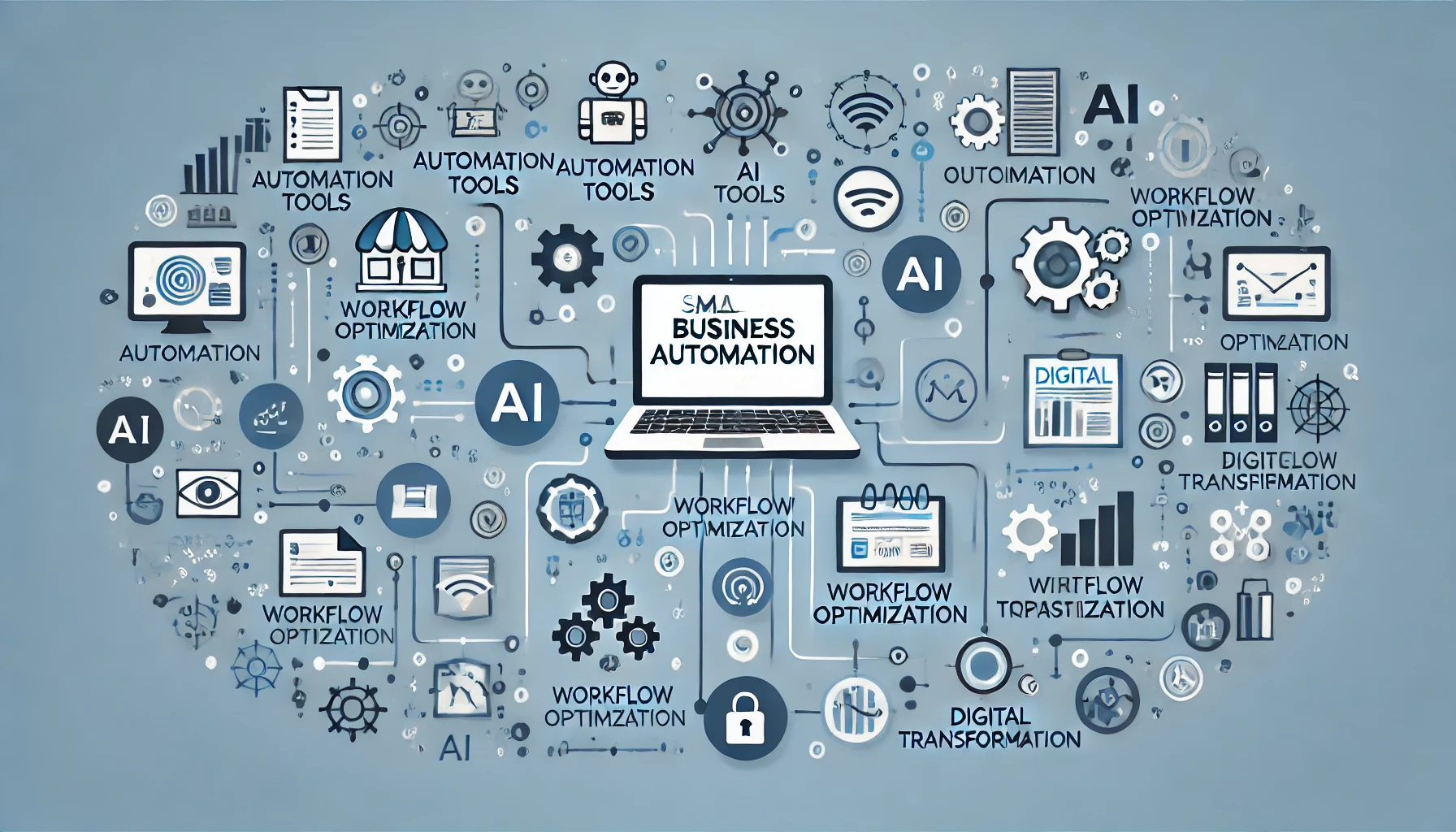
How to Implement Automated Business Ideas

Automated Business Ideas You need to identify specific areas for you Automated Business Ideas after you have established the list of potential Automated Business Ideas:

A. Identify Areas to Automate
Focusing on your operational flow enables you to recognize workflow functions for automation such as invoicing and customer follow-ups.

B. Choose the Right Tools
Pick tools which match your requirements. Your eCommerce store should use Shopify effectively for running sales while Mailchimp delivers email automation capabilities.

C. Ensure Seamless Integration
Tools must have capability to exchange data with each other. Link your eCommerce system with the email marketing solution to create reliable customer interactions.

D. Monitor Performance
You should utilize Google Analytics as your analytics tool to monitor your automated processes at work. This information will benefit substantially from performance optimization.

E. Test and Optimize Workflows
A comprehensive review of your workflows should be performed at regular intervals to verify their operational effectiveness. Make necessary workflow changes based on performance measurement results supported by user input.

F. Diversify Revenue Streams
You should maintain automated operations yet explore new sources of revenue. Dropshipping entrepreneurs should start selling digital products together with their existing business model.

Conclusion

Automated Business Ideas concepts provide an innovative method to start an efficient online venture. Right tools applied with appropriate strategies enable users to establish a business which functions independently even throughout their sleep while supporting their current way of life. The automation process can begin right now and we are here to help anyone ready to start. We assist clients through complete startup guide execution consultations for their business launch process. Reach out to us through our contact channels or send a form inquiry and we will respond as quickly as possible.

Mastering Small Business Automation: Tips, Tools, and Expert Advice for the Modern Entrepreneur

Mastering Small Business Automation:

Introduction: Small Business Automation: 

Feeling swamped? You spend each day balancing various responsibilities as you move to expand your small company. You’re not alone. Multiple small business owners end up sharing similar situations with insufficient time management as they expand their businesses. There exists an opportunity to retrieve your time while making yourself more efficient so you can concentrate on business expansion. The solution arrives from Small Business Automation technology.

What is Small Business Automation and Why Does It Matter?

Small Business Automation serves as a real solution that transforms business operations. Small Business Automation makes use of technology for repeating work tasks while improving your business workflow structure. Your digital assistants form an automated labor force which operates while you are away from mundane responsibilities.

Task management only marks the starting point of what Small Business Automation can deliver. The technologies that comprise Small Business Automation consist of:

  • Artificial Intelligence (AI)
  • Machine Learning (ML)

Your smart operational efficiency increases through the application of technology. The business size becomes unimportant as automated procedures actually provide rivals a strategic advantage to organizations with smaller structures that rapidly adapt to new market trends.

Mastering Small Business Automation:

Why is Automation so Important?

Small Business Automation generates numerous benefits that directly enhance your business profitability in major ways:

  • Saving Time and Money: Marketers report saving 25 hours per week with automation. Automation enables marketers to release 25 hours each week which allows them to save both time and money according to their reports. Small business automation allows customer service representatives along with salespeople and accountants to conserve 16 hours per week from their work week. Extra hours of productivity from automation open up a world of possibilities for you.
  • Improved Efficiency: Business automation allows processes to function more efficiently by minimizing system slowdowns while optimizing everyday operations.
  • Reduced Errors: The execution of automated processes significantly decreases errors because it eliminates manual entry of data and repetitive operations.
  • Focus on Strategic Activities: trategic business activities receive your attention after you remove time restrictions because automation frees your schedule.
  • Improved Customer Experience: The automation system enhances customer experiences by providing quick response capabilities as well as custom messaging and flawless service methods.


Common Misconceptions About Automation

Let’s clear up a few myths:

  • “Automation is only for large companies.” Large corporations remain the only group that can utilize automation technologies. Not true! The market offers specific automation tools that adapt to your business growth needs as a small operation.
  • “It’s too expensive or complex.” Every budget along with each technical profile matches automation solutions on the market. Customers can access user-friendly controls through multiple automation tools in their interfaces.
  • “It will replace human employees.” utomation serves to bolster your team rather than substitute human workers. The automation system alleviates staff members from trivial responsibilities which enables them to dedicate their time to significant and innovative work.


Key Areas to Automate in Your Small Business

Ready to dive in? These are the main sections where Small Business Automation proves its worth:

A. Customer Relationship Management (CRM)

  • Explanation: A CRM system enables businesses to monitor leads along with managing interactions and consolidating data into a single central database.
  • Benefits: Automated lead management enables easier customer satisfaction while building better communication capabilities which leads to more sales.
  • Tools: Pulse CRM, Keap, HubSpot.

B. Marketing Automation

  • Explanation: The system applies automation to marketing projects which helps lead management as well as customer relationship development and conversion rate enhancement.
  • Email Marketing: Automate email campaigns, newsletters, and follow-ups. Businesses must activate welcome messages, send cart abandonment alerts alongside sending birthday salutations to their customers.
  • Tools: Mailchimp, ActiveCampaign, Sendinblue.
  • Social Media: The application of scheduled posts enables programmed social media engagement that helps companies monitor their performance metrics. Tools: Buffer, Hootsuite.
  • PPC Campaigns: Support AI tools to optimize your PPC campaign bidding and keyword management processes which leads to amount savings and optimized ad spending.

C. Sales Automation

  • Explanation: Your business will achieve higher sales volume through an optimized sales process design that makes operations more efficient.
  • Lead Scoring: A lead scoring system evaluates behavior patterns of leads for automatic prioritization.
  • Quoting Software: A quoting software tool enables users to produce professional quotes yet maintain automated follow-up process.
  • Sales Pipelines: The Sales Pipelines tool enables users to track the entire sales pipeline progression from initial prospect lead through to final purchase.

D. Customer Service Automation

  • Explanation: The system delivers immediate assistance for problem resolution which generates enhanced customer satisfaction.
  • Chatbots: The customer service robot system provides support through answering questions and guiding clients to the appropriate agent.
  • Help Desk: The Help Desk solution allows for automatic complaint tracking together with knowledge base development and customer support activity monitoring.
  • Feedback Requests: The system executes surveys and refers customers to initiate feedback responses that yield useful information and new opportunities for leads.

E.-commerce Automation

  • Explanation: The automation system focuses on enhancing tasks that involve web-based sales operations and order processing in addition to managing customer interactions.
  • Abandoned Cart Emails: Customer reminders about unfinished purchases arrive through abandoned cart emails which aim to bring them back.
  • Order Confirmation Emails: Order Confirmation Emails send instant verification messages with delivery updates together with package tracking information.
  • User Accounts: The system allows users to benefit from effortless purchasing as it enables secure data storage and individualized product recommendations.

F. Business Operations Automation

  • Explanation: Normalizing administrative processes through automation will boost efficiency while cutting down manual labor.
  • Appointment Scheduling: The Calendly system enables booking times through an automated interface which avoids manual communication and simplifies all scheduling processes.
  • Invoicing and Payroll: The system will handle invoicing operations alongside payroll functions allowing both time efficiency and error reduction.
  • Document Management: Document Management procedures should include automation for document collection and storage alongside organization systems to boost efficiency as well as compliance standards.
  • Daily Reporting: The system retrieves performance data from different online sources each day to generate reports and support sound decisions.

G. Communication Automation

  • Explanation: A systematic approach to external as well as internal communication brings about improved collaboration and better operational efficiency.
  • The system should send automatic alerts to team members before their upcoming meetings.
  • The system follows up on tasks automatically whenever established periods expire.

H. Task Management Automation

  • Explanation: Manual task management systems should unite as an organization-wide system to enhance team productivity and collective work.
  •  All tasks related to daily operations and project work can be found unified on task-management platforms Asana and Monday.
  • Zapier enables automatic data insertion to key spreadsheets and additional databases when new leads and sales processes are completed.

Other tasks to consider

  • Password Management: Use 1Password and Dashlane generate and store secure passwords for every service you use under a single key.
  • Expense Tracking: Use Expensify to track business expenditure, and never lose a receipt again.
  • Sales Tax: Use Kintsugi is a one stop sales tax compliance platform where you can integrate your platforms and automate your entire tax cycle with a few clicks of a button.

Expert Tips for Successful Small Business Automation

Implementing automation isn’t just about buying software; it’s about creating a strategic plan for your business. Here are some expert tips to guide you:

A. Start Small and Prioritize

  • Search for operations within your business which require maximum effort while repeating frequently.
  • Automate the operations that will lead to maximum business revenue benefits.

B. Define Clear Goals and Objectives

  • Define your automation goals before you start. Increase sales? Improve customer satisfaction? Save time?
  • How will you measure success? You should define objectives which are Specific, Measurable, Achievable, Relevant and Time-bound (SMART) in nature.

C. Choose the Right Tools

  • Understand your available spending and ability to handle tool complexity as well as what operations need improvement.
    Select automation tools which merge excellently with your current organizational technology.
  • Try all free trial options along with demo versions before making a final purchase.
  • Tools: Zapier, Hootsuite, Grammarly, Google Ads, Calendly, Xero.

D. Document Your Processes

  • Writing down precise operating instructions for all robotized duties represents essential documentation.
  • Standard documentation of tasks enables new team members to start quickly because the company operates with consistent methods.

E. Test and Refine Your Automations

  • Regular testing of your automated systems must occur with the option to alter them when required.
  • Explore various approaches during experimentation because this will help you discover successful solutions that work for your business operations.

F. Train Your Team

  • The team needs a complete understanding of automated system operations together with excellent skills in using these systems.
  • Offer continuous education and system assistance to help employees integrate new technologies and operational methods.

G. Maintain a Human Touch

  • Don’t over-automate customer interactions. Customers still value personal connections.
  • To develop loyal customers you should customize communication and deliver top-tier customer support.

The accounting process benefits from QuickBooks Online which serves as an efficient tool to maintain financial record tracking.
Password managers serve to provide sharing and security of login credentials among team members. LastPass offers users password generation and storage capabilities suitable for personal and team-based or enterprise operations.

Tool Recommendations: The Best Automation Software for Small Businesses

Choosing the right tools is crucial for successful Small Business Automation. Here’s a curated list of some of the best options, categorized by function:

  • CRM:
    • HubSpot: A comprehensive CRM platform with marketing, sales, and customer service automation features.
    • Keap: A CRM and automation platform designed specifically for small businesses.
    • Pulse CRM: Delivers CRM software, including importing your data, configuring sales and marketing automations, designing branded email templates, writing engaging email copy, setting up sales pipelines, and much more.
  • Email Marketing:
    • Mailchimp: A popular email marketing platform with automation features for sending targeted campaigns and newsletters.
    • ActiveCampaign: Combines email marketing, marketing automation, and CRM capabilities.
    • Sendinblue: An email marketing platform with a generous free plan and robust automation features.
  • Social Media:
    • Buffer: An affordable social media management suite with scheduling and automation features.
    • Hootsuite: A comprehensive social media management platform with scheduling, monitoring, and analytics tools.
  • Project Management:
    • Monday.com: A visual project management platform with automation capabilities for streamlining workflows and tasks.
    • Asana: A project management tool that allows teams to organize, track, and manage their work efficiently.
  • Workflow Automation:
    • Zapier: A user-friendly platform that connects different apps and services to automate tasks.
    • IFTTT: A task automation tool that helps you streamline daily work with the click of a button.
  • Accounting:
    • QuickBooks: An accounting software for small businesses.
    • Xero: A cloud-based accounting platform designed for small businesses.
  • Scheduling:
    • Calendly: An online scheduling tool that eliminates back-and-forth emails and simplifies appointment booking.
  • Customer Support:
    • Chatfuel: A platform that helps you Create flow-based chatbots and they have a library of existing templates.
    • Intercom: A customer messaging platform with automation features for providing support and engaging with customers.
  • Integrated Solutions:
    • CAFLOU: A business process management (BPM) solution that combines workflow automation, invoicing, and cash flow management.

Common Pitfalls to Avoid

Potential benefits from automation need proper management because these pitfalls should be avoided:

  • Over-Automation: The attempt to automate sensitive customer service inquiries along with other tasks that benefit from personal intervention.
  • Lack of Monitoring: Neglect of security measures in automated systems produces data breaches together with non-compliance issues.
  • Neglecting Maintenance: Automations go without proper tracking since organizations neglect monitoring their systems which causes system inefficiencies and lost opportunities.
  • Not adapting to change: Failure to update and maintain automated systems will lead to both errors and compatibility issues.

The Future of Small Business Automation

The future of Small Business Automation is bright, with several exciting trends on the horizon:

  • AI and Machine Learning: AI-powered tools will develop stronger abilities through AI and Machine Learning technologies for delivering customized and smarter automation capabilities.
  • Low-Code/No-Code Platforms: Manufacturers of Low-Code/No-Code platforms will enable non-specialist users to build their own applications through intuitive development tools.
  • Personalization at Scale: The ability to deliver individualized customer engagements through automated programs will enable businesses to strengthen customer engagement while increasing loyalty at scale.
  • Hyperautomation: Businesses can reach complete automation by integrating multiple tools including AI and RPA and BPM under the concept of hyperautomation.

Conclusion

Success in the competitive market of today requires Small Business Automation to become mandatory for businesses. Implementing automation for repetitive work and process enhancement through technological power gives you time to concentrate on business expansion.

Ready to take action? Begin with minimal changes by determining essential tasks before selecting appropriate tools for your professional operations. Keep in mind that automation constitutes a voyage rather than a final location. Regularly test your strategies for optimization coupled with adaptive adjustments to maintain leadership in your market segment.

Why is the issue of sustainability important for development

why is the issue of sustainability important for development

Introduction: why is the issue of sustainability important for development

People mostly consider why is the issue of sustainability important for development and think of them as independent aims until we merge them together. The creation of better current situations forms the basis of development yet sustainability functions by protecting anything improved today from causing potential deterioration in the future.
What makes sustainability problem important for development? The question speaks about global impact regarding both our planet and the future. This essay will explore the importance of sustainability past being a fashionable term because it is essential to achieve both long-term well-being and progress.

What Exactly Do We Mean by “Sustainability?”

Sustainability includes hugging trees among other crucial aspects (which remain beneficial). The approach consists of three interconnected pillars that form its base.
• Environmental Sustainability: The protection of Earth’s natural resources makes up environmental sustainability. The sustainable concept brings together the essential elements of clean water and air and preserved forests and existing wildlife populations. Sustainable actions require us to manage resources effectively and minimize pollution while working against climate change.
• Social Sustainability: The second pillar of sustainability termed Social Sustainability works towards establishing equal and just societies across the world. Sustainable development requires that everyone obtains their fundamental needs of education while obtaining healthcare benefits and enjoys a satisfactory standard of living. Human rights respect combined with equality promotion and community growth constitute the foundation of sustainability.
• Economic Sustainability: Economic Sustainability involves developing economic growth that sustains without environmental harm or people exploitation. Job creation and innovative resource management alongside efficient use and promotion of resources aligns with the meaning of economic sustainability.
Our path to real sustainable development manifests when the three pillars function as a harmonious system.
why is the issue of sustainability important for development

The Core of the Matter: why is the issue of sustainability important for development

Sustainability holds critical importance for development because of what reason? The main points explaining this importance include the following:
• Protecting Resources for Future Generations: Future generations lack access to resources when today’s population overdrafts their available bank funds. Unsustainable development empties planet resources like an account from which future generations would be left without. The practice of sustainability enables us to employ our resources effectively in order to secure necessities for generations to come.
• Minimizing Environmental Damage: The environmental destruction caused by unsustainable procedures creates both climate disruption and polluting processes as well as global deforestation. Such problems damage our environment as well as reduce human health quality and well-being. Sustainability emerges as the solution to reduce these harmful results.
• Maintaining Ecological Balance: Every species within our planet maintains a fundamental role in sustaining life in our ecosystems. Human activities that disturb natural ecological stability through causes like deforestation or pollution produce extensive global effects. Sustainability creates safeguards for biodiversity which lead to the preservation of healthy ecosystems.
• Meeting the Demands of the Future: Sustainability helps us fulfill the resource requirements that will grow with the expanding world population. Sustainability enables us to fulfill present-day needs while safeguarding future population’s capability to satisfy theirs.
• Ensuring Long-Term Economic Growth: Sustainability creates favorable long-term economic growth because it safeguards the productive capacity of the future. Employing efficient resource usage together with renewable energy investments will generate employment opportunities and foster innovative developments to construct an economically solid system.
• Mitigating Risks: Business operations along with economic stability face major risks whenever environmental damage or social tension both occur. Sustainability cuts down these risks through responsible practices that create social equity.

When Development Goes Wrong: Lessons from History

The implementation of why is the issue of sustainability important for development strategy becomes better understandable when we review cases where this key priority is deviated from.
• The Dust Bowl (1930s, USA): The Dust Bowl of 1930s America became a vast dust desert which evicted thousands through excessive farming combined with negligent land stewardship.
• The Aral Sea Disaster (1960s-Present): The Aral Sea Disaster (1960s-Present) began when massive irrigation projects emptied the Aral Sea which resulted in complete destruction of both its environment and the dependent economic systems.
• Amazon Deforestation (Present): The present-day deforestation within the Amazon rainforest persists as a result of harmful land management that damages biodiversity while altering global carbon flows.
Such cases demonstrate why sustainability needs to become an essential component of every development initiative.

Sustainability and Development: The Indian Context

The reason why is the issue of sustainability important for development plays a critical role in the development of India because of its large population. India holds a population of more than 1.4 billion people which puts heavy strain on its natural resources. Climate change, rapid urbanization, and industrial expansion all pose significant challenges.
• The Economic Impact of Climate Change: A research from Reserve Bank of India (RBI) projects that India stands to lose 4.5 percent of its GDP by 2030 because of labor depletion caused by climate change.
• India’s Sustainable Development Goals: India intensifies its commitment to achieve United Nations Sustainable Development Goals (SDGs) through 2030 as it strives to accomplish the objectives “No Poverty” “Affordable and Clean Energy” and “Climate Action”.
The country is advancing with its climate change goals through sustainable farming programs along with renewable energy investments and biodiversity preservation measures this is why is the issue of sustainability important for development.
.

What Can Be Done? The Role of Governments and Citizens

A successful achievement of why is the issue of sustainability important for development requires everyone to join forces. Economic stability demands that governments implement sustainable measures through investment into green technologies together with environmental regulation enforcement.
The population of citizens plays an essential part in creating progress. Daily practices which support sustainability include the following actions for everyone to adopt:
• Conserving energy and water.
• Reducing waste and recycling.
• Supporting sustainable businesses.
• Advocating for sustainable policies.

Sustainability: A Necessity, Not a Luxury

The matters of why is the issue of sustainability important for development create essential impacts on the process of development. Sustainability creates an environment that allows people to prosper both in present times and through future generations. We need sustainable actions as a means to defend the planet while advancing social fairness together with building economic sustainability. Every successful and equal future depends on sustainability as its essential component.

Conclusion

The topic of why is the issue of sustainability important for development stands as an essential factor for achieving development. Amazingly sustainability transcends meaning being only theoretical because it requires us to take steps that transform thoughts into reality. Sustainable practices create an environment where development produces enhanced life quality benefits for every individual. Our time has come to act alongside innovative actions that lead to sustainable solutions for building a prosperous sustainable world.